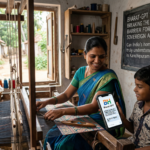


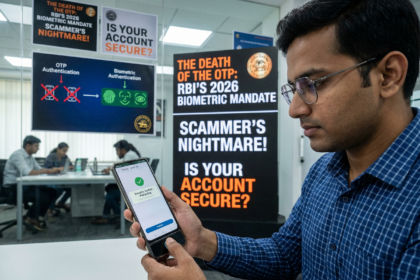
Since more than ten years the lowly six digit OTP has served as the gate keeper to our online lives. It was the last word in security whether it was an order of a late-night snack or transfer of life savings, that flickering SMS was the order of the day. However, in the year 2026, the RBI is giving us an indication of the termination of an era.
The RBI’s 2026 Biometric Mandate is a reality and is poised to transform the DNA of the digital payments in India. It is a slight adjustment to the habit of the average user; a death sentence on the digital plane to the advanced scammers.
Why the OTP is No Longer Enough
The OTP was made simpler in its time. The scammers have developed today at a faster rate than the technology intended to curb them. There are dozens of breaches through which people can intercept and fool users into giving out their OTP: phishing and SIM-swapping are only a few types of social engineering.
The RBI realized that millions of Indian bank account units were putting at risk, through the use of one interceptable sequence of numbers. The proposed new Authentication Framework, which is not based on SMS-based OTP, is an immediate answer to this fraud epidemic.
The Vulnerabilities of SMS-based OTP:
-
SIM-swapping: Scammers will clone your SIM and then they will automatically get your OTP.
-
Phishing: It simulates phishing attacks that prompt you to enter your OTP in real-time.
-
Social Engineering: Fraudsters use an opportunity and present themselves to confirm your OTP via a phone call as bank officials.
-
Network Delays: It is no secret that all of us have been standing in front of a screen waiting on an OTP message that never comes and, thus, we end up making a failed digital payment.
Understanding the 2026 Biometric Mandate
In the RBI’s 2026 Biometric Mandate, there is a more powerful Two-Factor Authentication (2FA) system. On April 1, 2026, RBI allows at least one factor of authentication to be dynamic and inherent to the user.
It implies that biometric authentication, i.e. fingerprint scan, face scan, and iris scan, will be the main method of authorizing the UPI transactions, credit card payment, and net banking.
The Three Pillars of the New Security:
-
Something You Know: Your PIN/ Password.
-
Something You Have: Your bound device (device binding).
-
Something You Are: Your biometrics (Fingerprint or Face ID).
Why This is a Scammer’s Worst Nightmare
The merits of biometric authentication are that it cannot be phished. The fraudster in another distant call center can easily defraud you into giving them a number, but can not steal your thumbprint or face over the phone.
Harder to Replicate
Biometrics are special to your physical being unlike a digital code. A fraudster would not be able to crack through the biometric lock even with the details of your bank account and your phone number unless he/she is in your presence.
Device Binding
The strict binding of the devices is provided by the mandate. This implies that your banking app will be encrypted to your model smartphone. In case a scammer attempts to log into your account using another device, it will be immediately identified by the system as a high-risk transaction and blocked.
Eliminating Interception
There are no OTPs flying through the weak airwaves of a telecommunication network that a hacker can intercept since biometric data is processed on your machine (with Secure Enclaves), which makes no use of the insecure and unprotected airwaves.
Risk-Based Authentication: Smart Security
Risk-Based Authentication is one of the most anthropocentric aspects of the RBI guidelines. The RBI does not need a facial scan with each purchase of a 10 rupees chai. Rather, AI is employed to analyze the level of a risk of a transaction by the system.
-
Low-Risk: Small balances of your normal location using your own phone may be required to enter a PIN.
-
High-Risk: Any massive transfer to a new beneficiary or a log in out of town will provoke the entire biometric requirement.
How to Prepare for the Switch
The shift to the post-OTP world is not going to occur overnight, yet, as an Indian customer, there are several measures you need to take to make your online payment uninterrupted:
-
Keep Your Apps Current: Importantly, your UPI and banking apps must be upgraded to the newest versions, which have passkeys and biometrics.
-
Turn on Biometric Locks: In case your phone supports a fingerprint scanner or FaceID, now turn it on in all financial applications.
-
Check Your Records: You need to ensure that your current smart phone is properly registered as your primary phone with your bank.
The Bottom Line
The Death of the OTP may seem as the completion of an old ritual, although this is the start of a far more secure digital India. The RBI is essentially blocking the oxygen that will keep scammers alive by ensuring biometric authentication is employed.
Although there are still no completely foolproof systems, the 2FA shift to biometrics elevates the wall to be extremely high that most of the so-called bedroom scammers will not be able to scale it. The digital world has turned your face and your fingerprint to be your best cover in crime.