

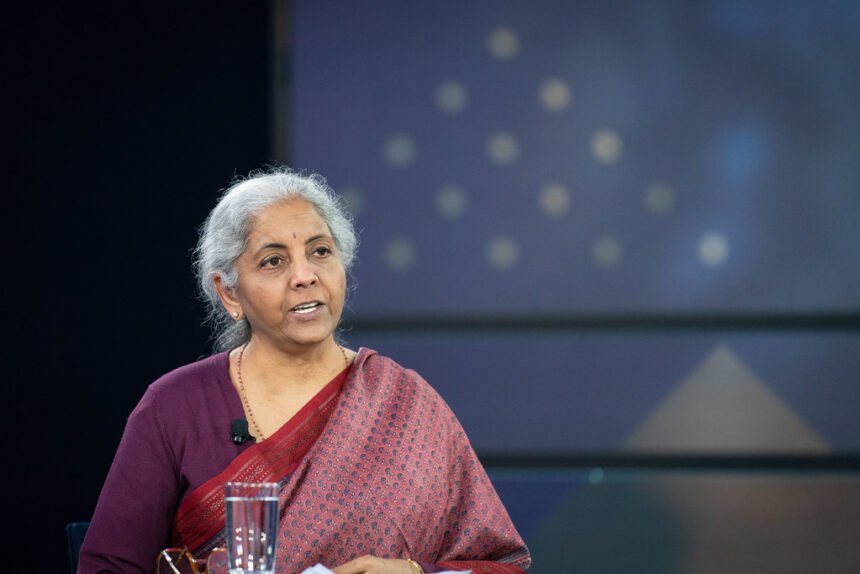
Union budget 2026-27 covered by the Finance Minister Nirmala Sitharaman is not centered on the subsidized support but strategic investment. The plan is based on the philosophy of duty as Kartavya, which is supposed to make India a global center of high-tech products and services.
The way the 2026 budget will transform the major industry niches:

1. Technology: The Era of Digital Sovereignty
The budget enhances the physical infrastructure of the digital economy. The headline announcement is the India Semiconductor Mission (ISM) 2.0 which takes a step ahead of assembly to design full-stack Indian Intellectual Property (IP).
- Manufacturing Muscle: The Electronics Component Manufacturing Scheme (ECMS) currently stands at a cost of ₹40,000 crore and enhances local manufacturing of high-value components.
- Cloud Sovereignty: Foreign companies based in India that operate cloud services in Indian data centres are provided with a tax holiday until 2047, thus turning India into a “data refinery.”
- AI as a Utility: The emphasis is put on the “Social AI.” A multilingual AI system dedicated to farmers, called Bharat-VISTAAR, is an indication of the budget commitment to utilizing technology in addressing the socio-economic challenges at large-scale.
2. Startups: Easing the Path to Scale
In 2026, there is more regulatory relief and global reach.
- E-commerce Export Revolution: The lifting of ₹10 lakh courier export cap will allow D2C (Direct-to-Consumer) companies and craftsmen to export their goods to every corner of the globe without bottlenecks.
- Simplified Taxation: The safe harbor threshold is increased to ₹2,000 crore (from ₹300 crore) in a new category of Information Technology Services, creating a longer time-span to innovate in the businesses.
- Creative Economy: The budget plans creator labs set up in 15,000 schools and 500 colleges to create a pipeline of digital entrepreneurs in AVGC (Animation, Visual Effects, Gaming, and Comics).
3. Healthcare: Shifting to High-Growth Assets
The medical sector has reached ₹1 lakh crore, which is no longer a social utility, it is a high-growth asset class.
- Biopharma SHAKTI: A mission of ₹10,000 crore will establish biologics and biosimilars ecosystem including 1,000 accredited clinical trial sites.
- Medical Tourism: There will be five regional medical hubs established in partnership with the private partners to transform India into one of the premier destination of high-end and affordable surgeries and wellness.
- Affordability: 17 life-saving cancer drugs and rare-disease medicines will have no customs duty, and Ayushman Bharat will be applied to the elderly population to have broader safety nets.
4. Education & Skilling: The “Education to Employment” Bridge
Budget has invested ₹1.39 lakh crore in education with a focus on employability.
- AHP Workforce: 1 lakh Allied Health Professionals (AHP) and 1.5 lakh caregivers will be added in a plan addressing the problem of talent shortages in healthcare and geriatric care.
- The AI Audit: A High-Powered Standing Committee will determine the effect of AI on jobs to make university programs adapt to the digital economy.
- STEM Access: New “Girls’ STEM Hostels” and increased digital platforms will close the urban-rural divide in technical education.
5. Business & MSMEs: From Debt to Equity
Better liquidity and fostering “Industrial Champions” is the priority in businesses and MSMEs.
- SME Growth Fund: A ₹10,000-crore fund will provide risk capital (equity) to small enterprises with high potential and enable them to grow into large-scale units.
- Liquidity through TReDS: Every Central Public Sector Enterprise (CPSE) shall utilize the TReDS platform and make faster payments which often suffocates mini businesses.
- Corporate Mitras: There will be a new group of professionals to assist MSMEs in Tier-II and Tier-III with low-cost compliance and governance to reduce the administrative burden.
Conclusion
In the year 2026 India Budget, a roadmap to a Self-Reliant and at the same time, a Globally Integrated economy is proposed. The government is focusing on semiconductors, skilling, and MSME equity so that the ecosystem can be created, where innovation spurrs real, quantifiable growth in the GDP.